Uber: The Success Story
Uber is one of the fastest-growing ride-hailing companies that offer various services like ride-sharing, ride-hailing, delivery of food and micro-mobility services with lightweight vehicles like scooters and bikes. The company was established in the year 2009 and has its headquarters in San Francisco, California. The digital business model of Uber has been one of the major factors contributing to its success. Evaluation of the market value of digital marketplaces like Uber highlights the current attractiveness of digital business models to the investors (Tauscher, 2016). Uber has made it easier to cover a distance for the consumers without having them to use their own transport. Consumers can use the Uber app to book a ride and other services without any hassle.
The digital business model of uber suggests that it addresses the most common issues of the consumers with the traditional way of transportation in the context of booking taxis including hassle in taxi bookings, higher fares, if the driver of the taxi is trustworthy or not, cash only mode of payment and so forth. Another important benefit that can be observed from the working process is that it creates opportunities for the car owners with all the verified documents for driving to earn an additional amount of money by driving.
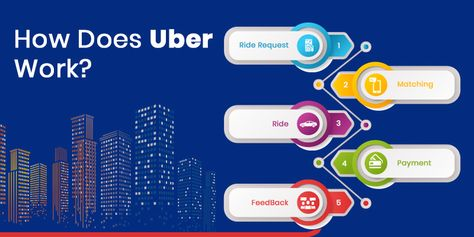
Uber provides all the necessary information that may be required by the users via its app which serves as a digital platform to have access over every detail. For the convenience of users, the Uber app can be downloaded from the app stores in smartphones, tablets, etc by the android or IOS users. This has helped the company in increasing its reach and accessibility among potential users worldwide. The existing users of Uber provide ratings on the app stores that attract other individuals to use these services and also help the company in improving its services through the feedback of its users.

The digital business model of Uber has been effective in increasing awareness about the company among the targeted users. Whenever a person books an Uber ride with a friend or relative who is non-users of Uber, they become aware of the Uber services (Tauscher, 2016). Consequently, the possibilities of positive word of mouth increase and thereby brand awareness among the potential users also increases. Furthermore, uber tries to improve its services as per the feedback of consumers. The network of drivers is strongly connected, and the route map used by the drivers to reach the destination has been improved through its digital business model.
The digital business model has helped the company in growing substantially in the last decade. According to Isaac and Davis (2014), observations from the digital business model of Uber signifies that the success of Uber is dependent upon the following three conditions:
- Uber has efficiently distinguished itself as a technology company rather than a transportation company that also helped uber in getting exemptions from the costly laws and regulations related to the usage of the taxi.
- The company treats its drivers across the world as independent contractors rather than the employees of the company. This allows the company to avoid the protections or perks assured to the employees as per the standard relationship of employees and employers that can be a costly affair for the company.
- It creates a poor labor market in which the drivers are prepared to deal with the burden of risks associated with the job and costs related to it.
The success of Uber in the market indicates that the company has effectively demolished the monopoly of taxi drivers in the cities and shifted the risks and associated costs onto the drivers or employees. According to Uber, it is nearly doubling the revenue of the company every 6 months (Isaac & Davis, 2014). Uber also offers various kinds of discounts on payments and also gives ride pass to the users which allows them to pay a convenient sum of money before and pay the rest of the amount later. They have also taken various measures to ensure the safety of users while taking a ride on Uber. Users can add their trusted contacts on the Uber app and these contacts can track the location of their loved ones while they are on ride.

Uber has an excellent marketing strategy that is cost-effective and attracts users easily. In order to travel a distance, using transportation is inevitable for people and therefore the change brought by Uber in providing affordable Uber ride in place of costlier taxi rides is noticeable. Therefore, it can be said that the digital business model of Uber has helped the company in maximizing its profit and reducing the risks and costs by strategically shifting some part of the costs and risks on the employees.
References
Isaac, E., & Davis, U. C. (2014). Disruptive innovation: Risk-shifting and precarity in the age of Uber (p. 7). Berkeley Roundtable on the International Economy [University of California, Berkeley].
Tauscher, K. (2016). Business Models in the Digital Economy: An Empirical Classification of Digital Marketplaces. Fraunhofer Center For International Management and Knowledge Economy.
 HAIYING HU

Hi, Haiying Hu, I found your post on Uber and their success as a digital platform to be very interesting. I agree that part of their success has come from their ability to tap into both the sharing and the gig economy with all of their services. Also, the number of services they now provide in high growth markets allows them to diversify their risk, aiding their success.
However, their app is not as sophisticated as one may assume, as recently the Uber app crashed, resulting in drivers being unable to access the app to accept rides or food orders (Speed, 2020). Furthermore, in regards to their taxi service, although Uber has previously been successful in London, they have suffered with adverse media reports regarding passengers’ safety, resulting in TFL’s decision to not renew their licence (Dudley, Banister, & Schwanen, 2017). This is not the only market Uber has experienced negative media in, or the only market they have been banned from due to lack of safety measures. Consequently, this makes me question how truly successful Uber have been?
I guess this depends on how you define success. If success is defined by how many countries and cities Uber are in, then yes, they have internationalised very quickly and could be considered successful. But if we define it through how many people would trust getting into an Uber taxi, or even in monetary terms, I don’t think they have been as successful as they would like us to believe, as they have seen significant losses in the past few years (Lee, 2020).
References
Dudley, G., Banister, D., & Schwanen, T. (2017). The rise of Uber and regulating the disruptive innovator. The political quarterly, 88(3), 492-499.
Lee, D. (2020, February 6). Uber shares driven higher by promise of profitability. Retrieved March 2020, from Financial Times: https://www.ft.com/content/7c491ccc-4921-11ea-aeb3-955839e06441
Speed, R. (2020, March 5). Uber takes a downer as ride-sharing app service crashes. Retrieved March 2020, from The Register: https://www.theregister.co.uk/2020/03/05/uber_down/
LikeLike
I very much agree with you. In 2017, the global revenue of the Uber platform reached US $ 7.5 billion, a record high; but at the same time, its losses continued to expand, with a loss of US $ 4.5 billion in 2017.
Although there is negative news, since Uber’s establishment until January 2018, Uber has raised nearly $ 17.3 billion in financing, but the expenditures such as driver subsidies and advertising marketing costs are about two-thirds of its financing scale. During this period, Uber also carried out its own investment layout, involving map search navigation, data cloud platforms, and unmanned R & D. Under the “burn money” model, Uber’s valuation has continued to rise.
LikeLike
Hi, Haiying! I’m also interested in the success of Uber.
In my opinion, Uber is quite a successful company in some perspective. It’s appearance has upended the monopoly position of traditional taxi industry. However, I think the model of Uber is not very complex that many companies can imitate it very easily. You might have heard that Uber has lost more than $2 billion before it quit the Chinese market. I attribute the failure to lack of Chinese market research that the model of Uber was not in line enough with the habits of Chinese costumers.
How do you think about it?
LikeLike
Since the merger of Uber’s China business with Didi in 2016, Uber has continued to merge with Russian and Southeast Asian competitors and acquired equity. At present, major shareholder SoftBank is pressing Uber to stop Uber’s losses in the Asian market and focus on the core Western and Australian markets. Uber is also negotiating with Indian ride-hailing rival Ola to seek to merge its Indian business with Ola.
After Uber withdrew from the Chinese market, from evading regulations to executive scandals to losing operating licenses in the London market in 2017, these all signaled Uber’s weak internal management. Uber is constantly optimizing and supporting the shared travel market, and it should also optimize and strengthen operational management.
LikeLike
Hi Haiying Hu,
With the rise of mass production, mass consumption came into being. People accumulate many things in the process of large-scale consumption, but a large part of them are leaving unused. The sharing economy creates a new way of transaction, by sharing a good or service with others, it saves money, resources and gains additional benefits. Therefore, uber take this as an opportunity and achieve its success. Uber has experimented with practices such as qualification checks, identities check, and both drive and consumer can commenting on each other, which have also increased the mobility of services on its platform. I do agree with you that Uber’s digital business model contribute to its success. Uber ‘s app is easy to use, and the booking is very convenient. Also, the price is relatively low.
Furthermore, it shortens the waiting time. However, uber need to consider the security issue. The recent year the sex harassment crisis become one of the main concern to consumers, according to the news, uber passengers reported over 3,000 sexual assaults. (Paul, 2020) Although uber go through identities checking to all their drivers, it seems like there is still vulnerability of the system. What do you think Uber can improve to solve this problem?
Paul, K., 2020. Uber Passengers Reported Over 3,000 Sexual Assaults Last Year, Report Says. [online] the Guardian. Available at: (Accessed 9 March 2020).
LikeLike
Since Uber was founded, a number of Uber drivers have been charged with rape and sexual assault. While formulating rules for driver and passenger relationships and interactions, some of the rules in the code appear to be tailored to those who use the ride-sharing service UberPool. UberPool lets passengers traveling to different destinations travel in the same car, which is a relatively cost-effective service.
“Don’t touch or flirt with other people in the car,” the code states. Drivers are also barred from flirting. “As a reminder, Uber insists on the principle of no sexual behavior. No sex can occur between the driver and the passenger.” The code also states that “no noise, no cursing, and no slamming of the door are basic courtesy. Tell passengers not to bring guns on board. Discrimination on the basis of race, religion and gender is also punished. The code states: “In the process of using Uber, any behavior, including violence, sexual misconduct, harassment, discrimination or illegal activity, will directly cause loss to your account.”
To prevent such incidents through legal means, cameras can also be installed in the car for monitoring.
LikeLike
Hi Haiying,
The emergence of Uber has changed the way people travel, and it will be more convenient than the taxi travel. However, because Uber drivers drive private vehicles, it is difficult for Uber to control the situation of each Uber driver. There is a potential safety hazard. If the driver attempts to misbehave, the safety of the passengers will be greatly threatened. What is your opinion or suggestion about this?
LikeLike